
Your needs, this model
Does it fit your priorities?
Can I keep the rear wheel on with Saris Mag?
Yes. SKU 1020T is wheel-on, so the rear tire remains installed and contacts a magnetic roller. The supplied steel quick-release skewer and Saris's listed 120, 130 and 135 mm settings do not guarantee fit: check your exact axle, frame spacing and tire before setup.
Explore this need in the finder →Will an app change Mag resistance for me?
No automatic brake control is documented. Saris describes five manual resistance levels and explicitly lists no handlebar shifter in the SKU 1020T base package. A separate speed or cadence sensor can let an app display data, but that is not app-controlled resistance.
Explore this need in the finder →Does SKU 1020T include a trainer cassette, Cog or sensor?
The documented box contains the Mag resistance unit, frame hardware and a steel quick-release trainer skewer, not a trainer cassette, Zwift Cog/Click or speed/cadence sensor. The bicycle keeps its own rear wheel and cassette. Check the seller's exact package and buy a sensor separately if app ride data is important.
Explore this need in the finder →Which tires fit the Saris Mag roller?
Saris lists 650b and 700c wheels, 27.5-inch tires up to 2 inches wide, and 29-inch tires up to 1.5 inches wide only when the tire has no tread. Its page rules out 650c, 26-inch and treaded or wider-than-1.5-inch 29-inch setups; a smooth trainer tire is recommended but not included.
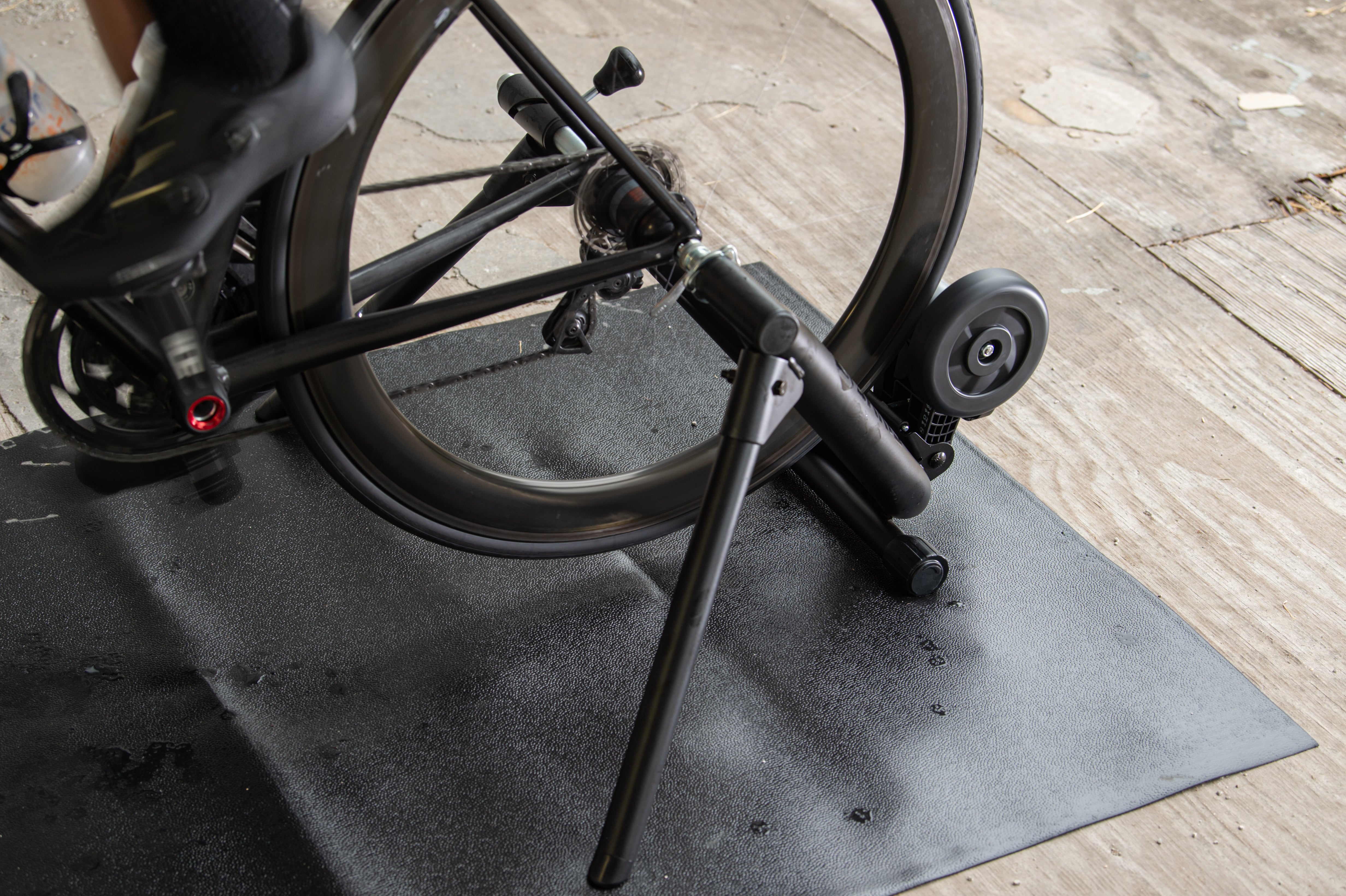
Explore this need in the finder →The Saris Mag is a basic rear-wheel-on magnetic trainer, identified on Saris's U.S. product page as SKU 1020T. It keeps the bicycle's rear wheel, tire and cassette in place and presses that tire against a resistance roller. The important point is that this is a manual unit: it does not become an app-controlled trainer because a separate speed sensor can send ride data to software.
A simple trainer with a hands-on control routine
Saris describes five adjustable magnetic levels and a linear resistance curve. In the 1020T setup, resistance is adjusted at the trainer; the listed handlebar shifter is an extra rather than a box item. That distinction affects an interval routine. If a rider wants to change settings without reaching down, the separately listed Mag+ package includes its cable-operated handlebar control. Both are wheel-on and manual, but they are not the same retail setup.
This mode also means that app use and resistance control must be assessed separately. Saris says the Mag can be paired with a speed or cadence sensor for supported cycling apps. A sensor can provide data such as speed or cadence; the maker does not document software commanding Mag's magnetic brake. No integrated power meter, accuracy specification or simulated climbing percentage appears in the product evidence reviewed here. The five dial settings should therefore be read as manual workout choices, not a digital grade scale or a calibrated watt measurement.
Fit needs a tire and axle check, not just a wheel-size label
Saris includes a steel quick-release trainer skewer and lists three rear-spacing positions: 120, 130 and 135 mm. The product page points riders with 142 x 12 mm or 148 x 12 mm thru-axles to separate adapters. A name such as “road bike” or “mountain bike” cannot settle those details; check the bicycle's exact axle type, rear spacing, brake clearance and the trainer's instructions before buying.
The tire rules are unusually important for a wheel-on purchase. Saris lists 650b and 700c wheels, 27.5-inch tires up to 2 inches wide, and 29-inch tires only up to 1.5 inches wide and without tread. It excludes 650c, 26-inch wheels, and 29-inch tires that are treaded or wider than 1.5 inches. A supported diameter is not a blanket statement that every tire width or frame fits. Saris recommends a harder-compound trainer tire to reduce wear, but it is not listed as included.
Room, noise and the work a wheel-on unit adds
The rear tire remains a contact point, so tire choice, pressure, roller tension and maintenance matter more than on a direct-drive model with the rear wheel removed. Saris describes a 2-inch alloy roller and a clutch-style tension knob, and its setup materials caution that knobby tires can increase noise and vibration. Its listed noise figure is 69 decibels at 20 mph. That is a maker-stated condition, not a measurement of this trainer in every room; floor construction, tire tread, cadence and distance can change what a household hears.
The assembly also requires the rider to secure the rear wheel correctly and check that the frame sits level. Saris lists a 300 lb maximum for the combined rider and bicycle, not rider weight alone. The relevant test before a purchase is not “does the bike look typical?” but whether the exact bicycle meets that load and tire/axle guidance while leaving space for movement, airflow and the front wheel.
Choose Mag only if the manual adjustment suits your workout
The 1020T makes the clearest sense for someone who wants an unpowered wheel-on base and is comfortable setting resistance by hand. It needs no AC supply for the magnetic brake, and it avoids buying a trainer cassette because the bicycle keeps its own rear wheel and drivetrain. Its tradeoffs are equally clear: no automatic app control, no included sensor, no cassette or Cog/Click, and no published grade percentage to satisfy the finder’s numerical climbing requirement.
Compare the Saris Mag+ 9902T if changing resistance at the bar matters more than keeping the package simple; its shifter is included but still manual. The Elite Qubo Fluid is another non-smart wheel-on choice but uses progressive fluid rather than magnetic resistance. For an actual app-controlled wheel-on arrangement, see the Elite Tuo assessment. These are different resistance and data routes, not a ranking from hands-on testing.
Assessment basis
This is a source-based model assessment rather than a ride test. Saris's exact 1020T page, comparison table, support listing and linked classic-trainer manual establish the described SKU, control method, axle/tire limits and stated noise condition. They do not prove compatibility with a particular bicycle, quiet operation in a specific home, current seller inventory or an exact package from a third-party listing. Before purchase, confirm SKU 1020T, the included skewer, any required thru-axle adapter, and whether the seller has added or omitted accessories.
Key specifications
Key details at a glance
| Trainer setup | Wheel-on / rear tire on |
|---|---|
| App-controlled resistance | No |
| Cassette included in reviewed package | No |
| Zwift Cog and Click included in reviewed package | No |
| Listed connection protocols | |
| AC power adapter included | No |
| Mains power required for powered resistance | No |
| Manual resistance levels | 5 levels |
Use the exact model’s instructions for operating limits, supplied equipment and version differences.
Sources for this review
Sources for this assessment
See how this setup fits your own priorities.
The finder uses documented setup and feature differences. It is not a compatibility guarantee; verify your exact frame, drivetrain and supplied package.